How to Get a Car Out of a Ditch in Pulaski, TN
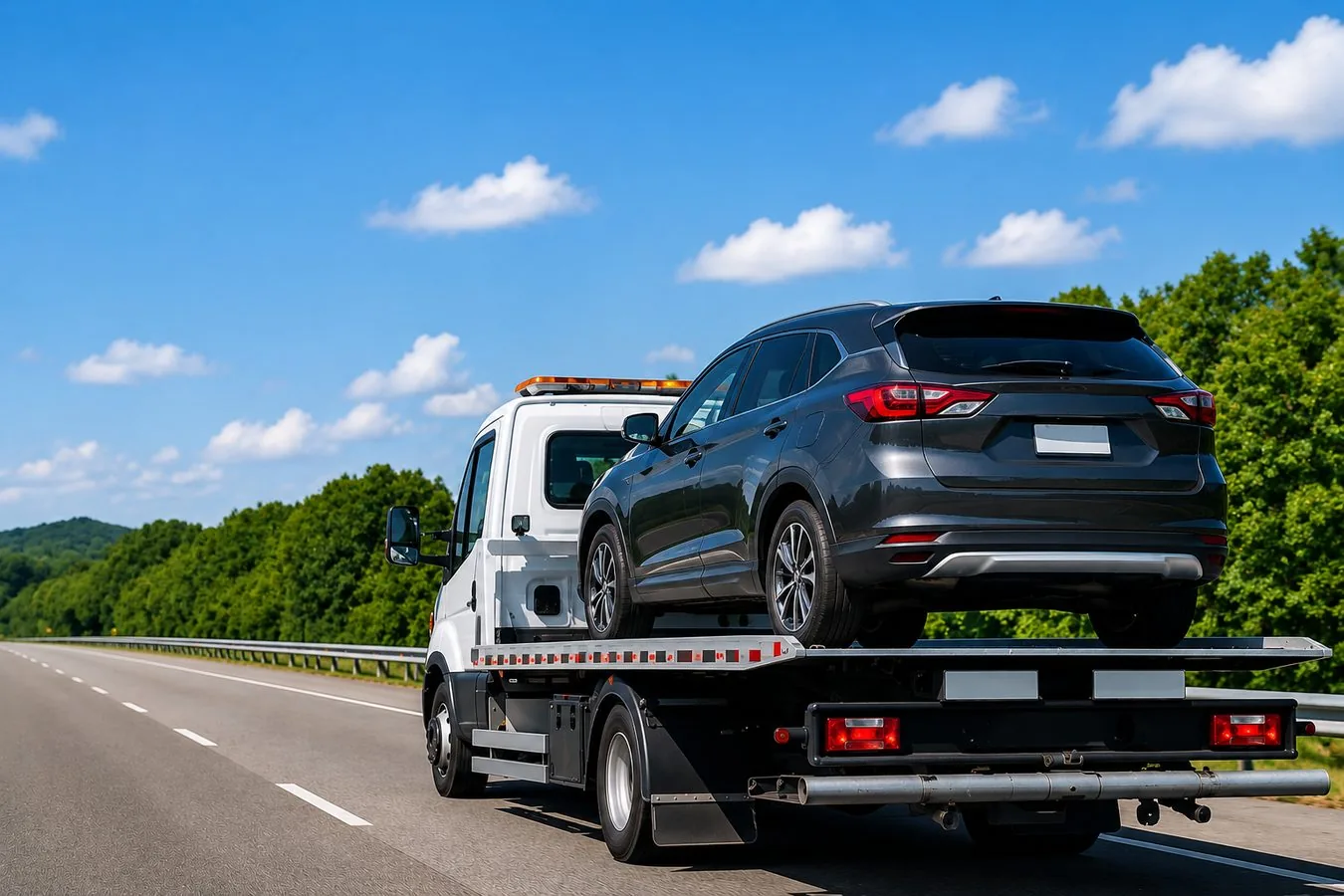
It usually takes about a second and a half. A wet leaf-covered shoulder on a county road out toward Minor Hill, a patch of black ice on a bridge deck, a deer at dusk on Highway 64 — and suddenly two wheels are off the pavement and the car is leaning at an angle that makes your stomach drop. Getting out of a ditch safely is mostly about what you do not do. Here is the sequence that keeps a bad afternoon from becoming an expensive one.
First: Is Anyone Hurt, and Where Are You?
Before the vehicle, the people. Check everyone in the car. If anyone is injured, or if the vehicle is in a travel lane, or if there is fuel leaking, call 911 first.
Then get your bearings so you can describe the spot. Rural Giles County roads all look alike to a dispatcher over the phone, so anchor it: a mile marker, a road name and the nearest intersection, a landmark like the Lynnville turnoff or the Elkton exit. A pin dropped in your phone's map app and texted over is even better.
Should You Try to Drive Out?
Sometimes, and the test is simple. If all four wheels are on solid ground, the vehicle is roughly level, and there is a clear, gently sloped path back to the pavement, you can try — once, gently. Straighten the wheels, use light steady throttle, and stop the moment you hear the tires spinning without moving.
Do not try if any of the following is true:
- The vehicle is leaning noticeably or resting on its frame or bumper.
- A wheel is off the ground or buried past the hub in mud.
- You would have to climb a steep bank to get back up.
- There is standing water in the ditch and you cannot see the bottom.
- You would be reversing blindly into traffic.
Spinning tires is the classic mistake. It digs trenches, glazes the mud into something slicker than what you started with, cooks the transmission, and on a slope can walk the car further down. Two minutes of spinning routinely turns a simple winch-out into a much bigger recovery.
Why the Friendly Pickup with a Chain Is a Bad Idea
Somebody will stop and offer. It comes from a good place and it goes wrong often. Modern unibody cars have exactly a few designated recovery points, and none of them are the bumper cover, a control arm, an axle tube, or a tie rod. Hook a chain to any of those and you can bend suspension geometry, tear a mounting point out, or crack a plastic bumper that costs four figures to replace.
There is also the strap itself. A chain or a stretched tow strap under load stores an enormous amount of energy, and when a hook lets go it becomes a projectile. Recovery injuries in situations exactly like this are well documented, and they are severe. If you take one thing from this article: let it be equipment and a person who does this for a living.
What a Professional Winch-Out Looks Like
A winch-out is a separate service from a tow, and on most stuck-vehicle calls in Giles County it is all you need — the car drives away afterward.
- Assess the scene. Angle of the vehicle, ground condition, traffic, and whether anything underneath is damaged or leaking.
- Find the real recovery points. Every vehicle has them; knowing where they are on a specific make and model is the actual expertise.
- Set the pull. The truck is positioned so the pull is as straight as possible, with snatch blocks used to redirect the angle if needed rather than dragging the car sideways.
- Pull slow and steady. Controlled winching, not a running yank. Slow is what keeps parts attached.
- Check it over. Once it is on pavement, a walk-around for tire damage, fluid leaks, or bent steering before you drive off.
What It Costs, and When It Becomes a Tow
A straightforward winch-out from a shallow ditch on a dry day is priced as a recovery call, and it is far less than people expect. It climbs when the vehicle is deep, when the ground is saturated, when the pull requires rigging around trees, or when it is the middle of the night. If the walk-around turns up a torn tire sidewall, a leaking line, or bent steering, then it becomes a tow — and you will be told that before it happens, not after.
Winter and heavy-rain weeks bring most of these calls. Checking conditions before you head out on rural routes is genuinely worth the thirty seconds; the NHTSA notes that most weather-related crashes happen on wet pavement, not in dramatic ice storms.
Off the road in Giles County?
Proper recovery points, proper equipment, and a crew that does this every week. Call before the tow strap comes out.
📞 Call (931) 286-7805Frequently Asked Questions
Should I try to drive out of the ditch myself?
Only if all four wheels are on solid ground and you have a clear, level path out. Spinning the tires digs you deeper, overheats the transmission, and can pull the vehicle further down the slope.
Will a winch-out damage my car?
Not when the cable is attached to a factory recovery point by someone who knows where those are. Damage happens when a strap is hooked to a suspension arm, an axle, or a bumper cover, which is the usual result of a well-meaning pickup with a chain.
Almost everyone who ends up in a ditch here says the same thing: the road looked fine right up until it wasn't.