5 Signs Your Car Battery Is Dying in Pulaski, TN
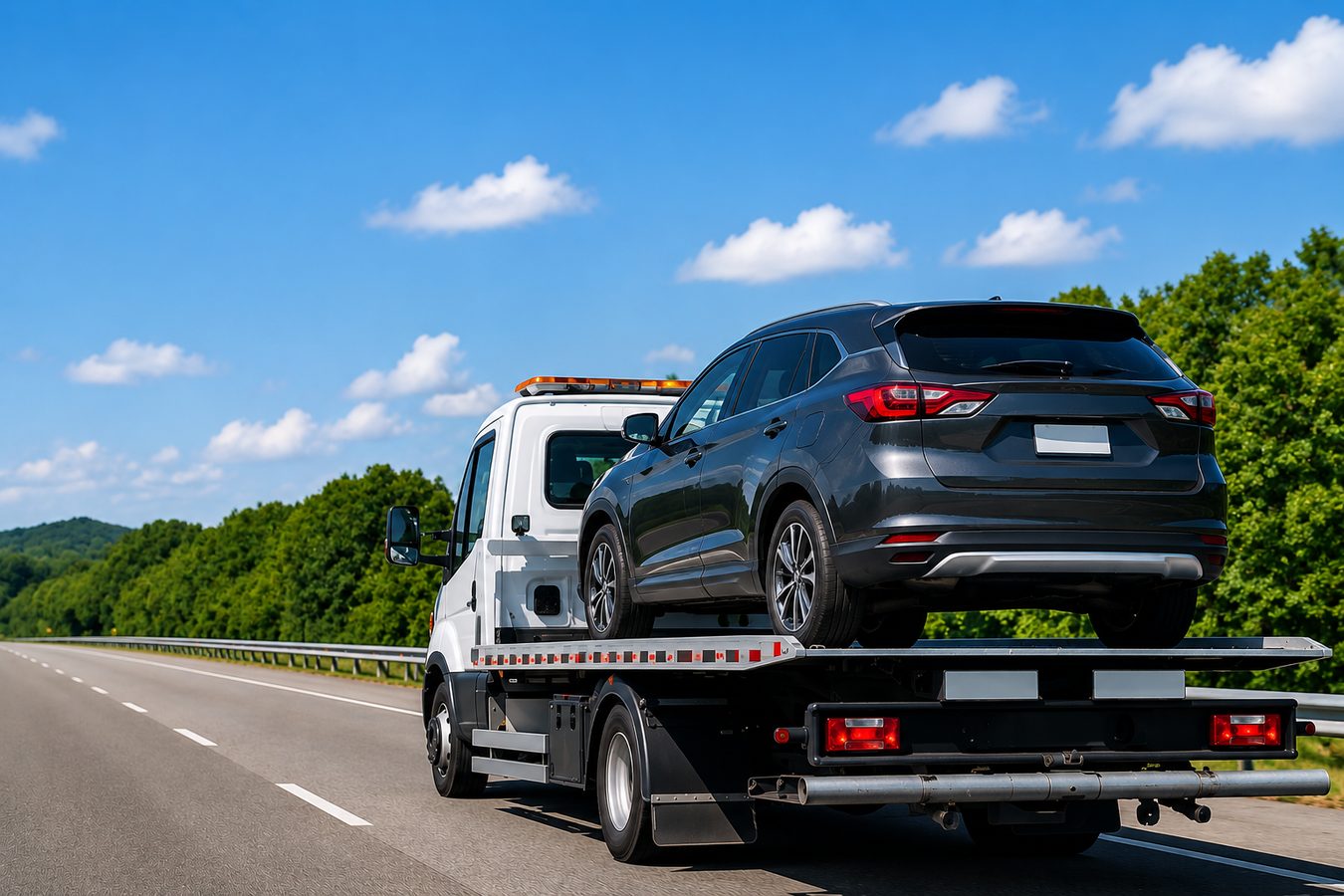
Your car battery almost always warns you before it quits for good — most drivers just do not know what to listen and look for. In Giles County, where summer heat bakes the pavement along US-31 and winter mornings can drop below freezing, batteries take a beating from both ends of the thermometer. A battery that felt strong in April can leave you stranded in a parking lot off Sam Davis Avenue by the middle of July.
At Pulaski Towing, we jump start dead batteries and tow no-start vehicles across Pulaski, Cornersville, Lynnville, Ardmore, Elkton, and the rest of the 38478 area every single week. Here is the pattern we see: almost every dead-battery call we run started with symptoms the driver noticed days earlier and hoped would go away. Catch those signs early and you can replace a weak battery on your own schedule — in your driveway — instead of on the shoulder of I-65 at 11 p.m.
Below are the five clearest signs your car battery is dying, what each one actually means, and exactly what to do about it here in Pulaski.
Why Car Batteries Die Faster in Middle Tennessee
A healthy car battery lasts three to five years, but our local climate rarely lets one reach the high end of that range. Heat is the real killer. When summer temperatures climb into the 90s, the fluid inside a lead-acid battery evaporates faster and the internal plates corrode more quickly. Then winter arrives and a weakened battery has to work far harder to crank a cold engine on a frosty Giles County morning. That combination — brutal summers followed by cold snaps — is why so many Pulaski drivers get only three good years out of a battery.
Short trips make it worse. If you mostly run quick errands around the square, to the Giles County Courthouse and back, your alternator never gets enough highway time to fully recharge the battery. Add a little corrosion on the terminals and an aging battery quietly loses capacity until one morning it simply cannot deliver the punch your starter needs.
The 5 Warning Signs Your Battery Is Dying
You rarely get all five at once. Usually one or two show up first, then more pile on over a week or two. If you notice any of these, treat it as a countdown.
1. A Slow, Labored Engine Crank
This is the most reliable early warning. When you turn the key or press start, the engine turns over slowly — that rur… rur… rur sound that drags instead of spinning up crisply. It means the battery no longer has enough cranking amps to spin the starter at full speed. A healthy battery cranks the same way every time. The moment cranking starts to sound tired, especially on cool mornings, your battery is on borrowed time.
2. Dim Headlights and a Flickering Dashboard
Sit in your car at night with the engine off and turn on the headlights. If they look noticeably dim, or if your dashboard lights and dome light flicker or fade when you crank, the battery is struggling to hold voltage. You may also notice the headlights brighten once the engine is running and the alternator takes over — a classic tell that the battery itself is weak.
3. Clicking When You Turn the Key
A rapid click-click-click — or a single hollow click — when you try to start the car is the sound of a battery that cannot deliver enough current to engage the starter. Sometimes a jump start gets you going, but a battery that has reached the clicking stage is usually days, not weeks, from a full no-start. If you hear it, do not shut the car off in a spot where you cannot get help.
4. Electrical Gremlins and Dashboard Warning Lights
Modern cars run dozens of systems off the battery. When it weakens, you get odd electrical behavior: power windows that crawl, a radio that resets, interior lights that dim when you use a turn signal, or a battery-shaped warning light glowing on the dash. Many vehicles also throw a check-engine or charging-system light when voltage drops out of range. If several small electrical quirks show up at once, suspect the battery before you suspect anything expensive.
5. A Swollen Battery Case or Rotten-Egg Smell
Pop the hood and look at the battery itself. A case that looks bloated or swollen has been cooked by heat — a common sight after a Tennessee summer — and is failing internally. A sulfur or rotten-egg smell near the battery means it is leaking or overcharging and venting gas. Either one is a safety issue as much as a reliability issue. Do not keep driving on a swollen or leaking battery; get it replaced right away.
Dead Battery or Alternator? How to Tell the Difference
Before you buy a new battery, it is worth knowing whether the battery is truly the problem or whether the alternator is failing to recharge it. A quick test: if you jump start the car and it dies again within a few minutes of unhooking the cables, the alternator is likely not charging — a fresh battery alone will not fix that. If it jumps and runs fine but will not start again after sitting overnight, the battery is the usual culprit.
The surest answer is a load test. Most auto-parts stores in and around Pulaski will test your battery and charging system free in a few minutes, and organizations like AAA offer detailed guidance on battery health and testing. If the test shows a weak battery, replace it on your terms. If it points to the alternator or starter, you may need a tow to a trusted shop rather than a simple jump.
What to Do When Your Battery Dies in Pulaski
If you are already stuck, stay safe first. Get the vehicle as far off the roadway as you can — fully into a lot or onto a wide shoulder away from traffic on US-64, TN-11, or I-65 — and switch on your hazards. Then call for help rather than flagging down strangers or standing in a travel lane.
Pulaski Towing runs 24/7, and for a dead battery we can usually solve the problem two ways. If the battery just needs power, our roadside crew delivers a professional jump start on the spot across Pulaski, Cornersville, Lynnville, Ardmore, Elkton, Minor Hill, and Fayetteville. If the battery is beyond a jump — or the real fault is the alternator or starter — we bring a licensed and insured, DOT-compliant flatbed or wheel-lift truck and tow you to the shop you choose. Slid off into a ditch after a no-start on a back road? We handle winch-out recovery too. Typical response time across Giles County is 30 to 45 minutes.
Battery dead? We will get you moving.
24/7 jump starts and flatbed towing across Pulaski and all of Giles County. Fast, licensed, and insured.
📞 Call (931) 202-9856Frequently Asked Questions
How long do car batteries last in Tennessee?
Most car batteries last 3 to 5 years, but the heat swings in Giles County shorten that. Middle Tennessee summers push under-hood temperatures high enough to speed up internal wear, so many local drivers see batteries fade closer to the 3-year mark. If yours is over three years old and showing any warning signs, have it load-tested before it strands you.
Can Pulaski Towing jump start my car or do I need a tow?
Both. If your battery is simply drained, our 24/7 roadside team can jump start most vehicles on the spot anywhere in Pulaski, Cornersville, Lynnville, Ardmore, or Fayetteville. If the battery is dead beyond a jump, or the real problem is the alternator or starter, we bring a flatbed or wheel-lift truck and tow you to the shop of your choice. Call (931) 202-9856 and we will send the right truck.
Have you ever been caught by a dead battery on a cold Giles County morning — and what tipped you off first?