What to Do After a Car Accident in Pulaski, TN
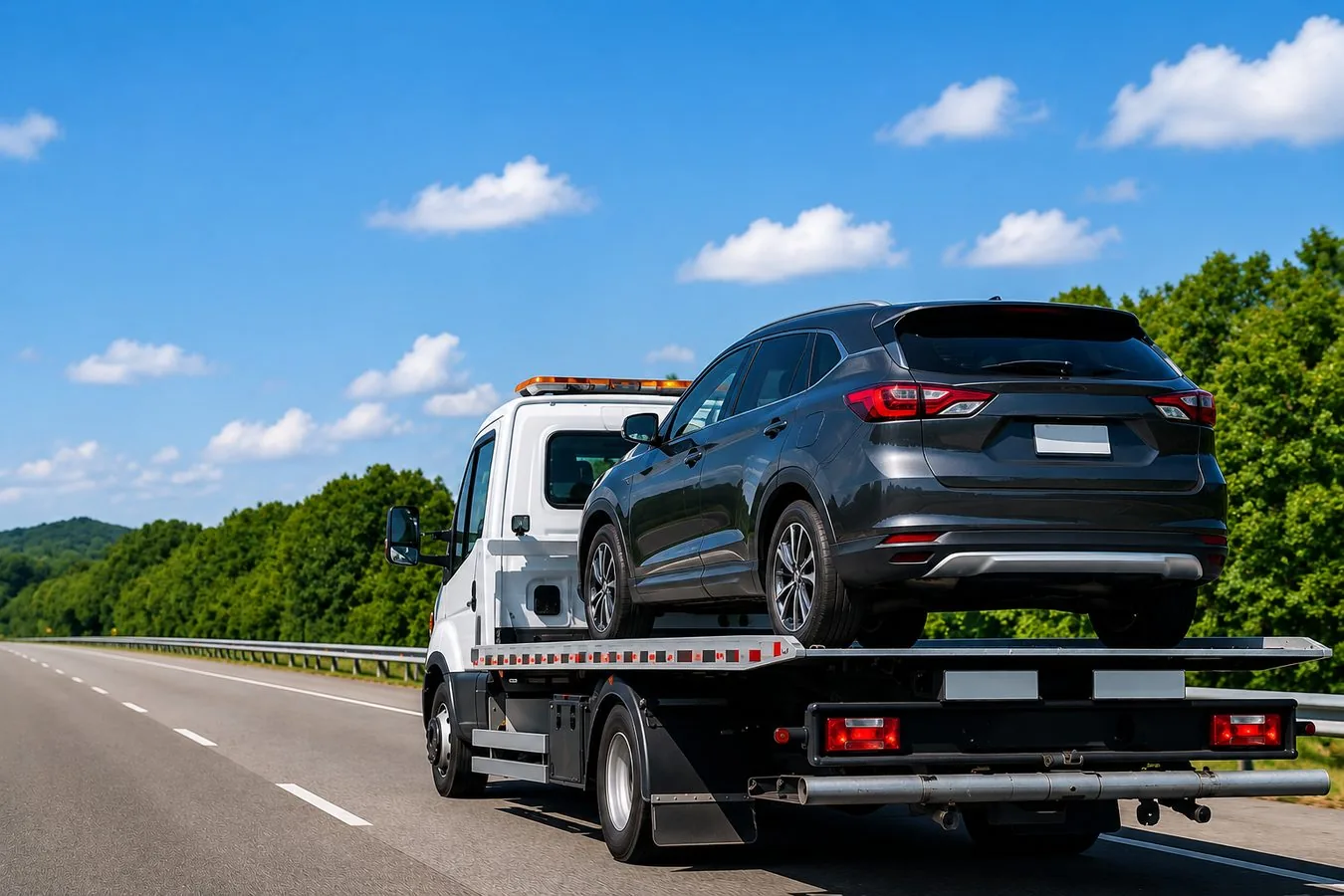
A car accident takes about two seconds to happen and about two hours to sort out. In those first minutes on the shoulder of US-31 or the ramp off I-65, your heart is pounding and it is genuinely hard to think straight — which is exactly why having a plan ahead of time matters so much. This guide walks through what to do after a car accident in Pulaski, TN, step by step, from the second the noise stops to the moment your car is loaded onto a flatbed and headed to a shop or your driveway.
We wrote this from the perspective of a local towing crew that shows up to Giles County crash scenes at every hour of the day and night. We are not attorneys and this is not legal advice — it is the practical, on-the-ground checklist we wish every driver had memorized before they needed it.
The First 60 Seconds: Breathe, Then Check for Injuries
Before anything else, take one slow breath. Adrenaline will make you want to jump out of the car and start arguing about fault, but the single most important thing right now is people, not property. Check yourself first: any sharp pain, dizziness, or trouble moving means stay put and wait for help. Then check your passengers, and only then anyone in the other vehicle if it is safe to reach them.
Do not move anyone who is unconscious or complaining of neck or back pain unless there is an immediate danger like fire. If airbags deployed, expect a burnt, powdery smell and some minor abrasions — that is normal, not necessarily an emergency. If anyone is hurt at all, that decision is made for you: call 911 immediately and let the dispatcher guide you. Giles County EMS and the Pulaski Fire Department both respond quickly inside city limits, and the sheriff covers the county roads.
Move to Safety — or Stay Put? Reading the Scene
Where your accident happened changes what you should do next. On a low-speed street near the Giles County Courthouse or along Sam Davis Avenue, if the cars are drivable and nobody is hurt, Tennessee law actually wants you to move vehicles out of the travel lane to prevent a second crash. Turn on your hazard lights, and if you have flares or reflective triangles, set them out well behind the scene.
On a fast, blind stretch it is a different story. If you are on US-64, TN-11, or especially the interstate, and the car is too damaged to move or you are not sure it is safe, leave it where it sits, get everyone behind the guardrail, and stay off the roadway. A surprising number of secondary injuries in Giles County happen to people standing next to a wrecked car in a live lane. Your bent bumper is replaceable — you are not.
Call 911 and the Giles County Sheriff: What to Report
In Tennessee you are required to report a crash to law enforcement if there are injuries, a death, or apparent property damage — and honestly, you almost always want a report anyway. Insurance companies take a police report far more seriously than two drivers' word against each other. When you call, give the dispatcher clear location details: the highway or road name, the nearest mile marker or cross street, the direction you were traveling, and whether any lanes are blocked.
While you wait, do not admit fault or apologize, even if you feel responsible. Fault is a legal determination for the officer and the insurers to make, and an off-hand "I'm so sorry" at the scene can come back to haunt you. Be polite, be factual, and stick to what you actually saw. When the officer arrives, ask how to obtain a copy of the crash report and write down the report number.
Document Everything: Photos, Info, and Witnesses
Your phone is the most valuable tool at the scene after your own safety. Take far more photos than you think you need. Capture wide shots that show both vehicles and their positions, close-ups of every dent and scrape, the license plates, any skid marks, road signs, traffic signals, and the overall scene from a few angles. If it is dark, use your flash — a clear photo at 2 a.m. on US-31 is worth a thousand words to an adjuster.
Then exchange information with the other driver: full name, phone number, insurance company and policy number, license plate, and the make and model of their vehicle. If there are witnesses — the driver who pulled over, someone from a nearby business — politely ask for a name and number. Independent witnesses can settle a disputed claim fast. The NHTSA guidance on what to do after a crash is a solid reference to keep bookmarked, and it echoes this same order: safety, report, document.
| Collect at the scene | Why it matters |
|---|---|
| Photos of both cars and positions | Shows point of impact and fault |
| Other driver's insurance and plate | Required to file any claim |
| Police report number | Speeds up the insurance process |
| Witness names and numbers | Backs up your account if disputed |
| Photos of road, signs, and signals | Establishes conditions and right-of-way |
When and Why to Call a Tow Truck After a Pulaski Accident
Here is the question we get more than any other: can I just drive it home? Sometimes yes — but a lot of post-accident damage is invisible from the driver's seat. Before you put it in gear, do a quick walk-around and look for fluid leaking onto the pavement, a tire that is flat or sitting at a strange angle, a hood that will not latch, body panels rubbing against the tires, or fluid smells. Any of those, and you should call for a tow rather than risk a breakdown — or a fire — a mile down the road.
If your airbags deployed, the car should be towed and inspected even if it looks driveable. A modern vehicle after airbag deployment often has sensors and structural components that need a professional eye. For accident recovery we almost always use a flatbed rather than a wheel-lift, because a flatbed carries the whole car off the ground and will not add stress to a bent frame, a seized wheel, or a damaged transmission. If your car left the roadway and is down an embankment off US-64 or stuck in a ditch, that becomes a winch-out recovery, which we also handle.
Every truck we send is licensed and insured and every operator is DOT compliant, so the tow itself never becomes a second problem. We serve Pulaski and the surrounding Giles County communities — Cornersville, Lynnville, Ardmore, Elkton, Minor Hill, and Fayetteville — 24 hours a day, ZIP 38478 and well beyond it. Whether it is a fender-bender downtown or a serious wreck on the interstate at 3 a.m., one call gets a truck rolling toward you.
Need a Tow After an Accident in Pulaski?
Flatbed recovery, winch-outs, and 24/7 roadside help across Giles County. Licensed, insured, and usually on scene in 30 to 45 minutes.
📞 Call (931) 286-7805Frequently Asked Questions
Do I need a tow truck after a minor accident in Pulaski?
If your car has fluid leaks, a flat or bent wheel, deployed airbags, body panels rubbing the tires, or any doubt about whether it is safe to drive, call for a flatbed tow instead of driving it. In Giles County we reach most accident scenes on US-31, US-64, or I-65 in about 30 to 45 minutes, 24/7.
Who pays for towing after a car accident in Tennessee?
It depends on fault and your policy. If the other driver is at fault, their liability insurance usually covers your tow. If you carry collision or roadside coverage, your own policy may pay. We give every customer an itemized receipt so you can file the claim without chasing paperwork.
Have you ever had to make that first phone call from the shoulder of US-31? We hope you never do — but we are here 24/7 across Giles County if you ever have to.